Source Vertical Tile Pattern Shower Surround for Bathrooms, Schools, Commercial Spaces
Find 30 verified options for vertical tile pattern shower surround suitable for bathrooms, schools, and commercial spaces. Buyers can compare specifications including material types like cultured marble and porcelain tile, surface finishes, and dimensions to select the best fit for interior wall and floor applications.
Key considerations
Products List




Comprehensive Sourcing Guide
Strategic Sourcing Guide for Vertical Tile Pattern Shower Surrounds
Understanding Product Definitions and Material Variants
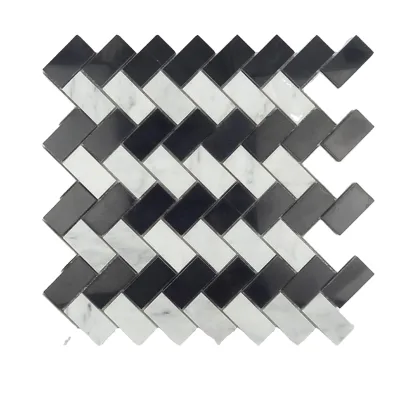
When sourcing a vertical tile pattern shower surround, buyers must first distinguish between the specific visual design and the underlying material composition. The term "vertical tile pattern" refers to the aesthetic arrangement of tiles, often creating a chevron or linear visual effect that draws the eye upward. However, the material base can vary significantly, ranging from cultured marble to porcelain and artificial stone. In the current market, "Cultured Marble" and "Artificial Marble" are frequently cited as distinct product types, often associated with solid surface applications. These materials are characterized by their ability to be molded into seamless units, which is a critical factor for shower surrounds where water tightness is paramount.
Conversely, porcelain tiles offer a different set of properties, often marketed for their durability and water absorption rates. The market data indicates the presence of "Porcelain Tile" products with specific thicknesses such as 9.8mm and 9.5mm. Buyers must verify whether the "vertical pattern" is achieved through the physical cutting of individual tiles or if it is a pre-fabricated panel design. Some suppliers offer "Cultured Marble" in panel forms with models like "Chervon Shower Surround," suggesting a pre-formed solution that mimics the vertical aesthetic without the need for on-site grouting. Understanding this distinction is vital, as the installation requirements and long-term maintenance profiles differ substantially between a grouted tile system and a solid surface panel system.
Technical Specifications and Dimensional Standards
Technical due diligence begins with verifying the dimensional standards and physical properties of the product. For tile-based solutions, the standard size often cited is 600 x 600mm, with a thickness ranging from 9.5mm to 9.8mm. These dimensions are critical for ensuring compatibility with standard bathroom layouts and framing systems. The weight per box is another essential metric for logistics planning; observed data shows variations such as 29 kg per box for certain configurations and 27.5 kg for others. The packing density, measured in pieces per box (ranging from 4 to 10) and square meters per box (1.44 m²), directly impacts shipping costs and handling requirements.
For solid surface or cultured marble panels, the specifications shift toward large-format dimensions. Products are often available in "Big Slab" forms or specific cut-to-size configurations. Standard panel dimensions mentioned in the market include 96''x60'' and 96''x30'', which are designed to cover large wall areas with minimal seams. The edge processing for these panels is typically "Eased," a finish that softens the sharp edges for safety and aesthetic appeal. Buyers must also consider the "Form" attribute, which can be either "Cut-to-Size" for custom projects or "Big Slab" for standard installations. The "Shape" of the product, whether square or custom, dictates the visual rhythm of the vertical pattern. Ensuring that the thickness and edge finish align with the specific design intent of the vertical pattern is a prerequisite for a successful procurement.
Compliance, Certification, and Performance Attributes
Compliance and certification are non-negotiable elements in the procurement of bathroom fixtures, particularly for wet areas like shower surrounds. The market data highlights specific certifications such as ISO and CE, which serve as indicators of adherence to international quality and safety standards. The CE mark, in particular, is a mandatory conformity marking for products sold within the European Economic Area, indicating that the product meets EU safety, health, and environmental requirements. Buyers should verify that the supplier provides valid documentation for these certifications rather than relying on verbal assurances.
Performance attributes are equally critical for long-term functionality. The "Function" of the product must include specific properties such as "Non-Slip," "Antibacterial," "Wear-Resistant," and "Acid-Resistant." These features are essential for maintaining hygiene and safety in a bathroom environment. For porcelain tiles, the water absorption rate is a key performance indicator; observed values range from 0.5% to 1-3%. A lower water absorption rate generally indicates a denser, more durable tile that is less prone to staining and water damage. Additionally, the "Surface Finish" can vary from "Polished" to "Dull Surfaced," with the latter often preferred for non-slip applications. The "Grade" of the material, such as AAA, suggests a high level of quality control in the manufacturing process. Buyers must ensure that the specific product selected meets the functional requirements of the intended application, whether it is a high-traffic commercial space or a residential bathroom.
Cost Drivers and Pricing Structures
The pricing of vertical tile pattern shower surrounds is influenced by a complex interplay of material costs, manufacturing processes, and logistical factors. The observed price range in the market spans from $0.75 to $200, reflecting the vast difference between individual tiles and large, pre-fabricated solid surface panels. The "Customization" attribute is a significant cost driver; products marked as "Customized" or "Available" for customization often command a premium over standard "Non-Customized" items. The "Form" of the product also affects pricing, with "Big Slab" and "Cut-to-Size" options typically costing more than standard square tiles due to the additional processing required.
Logistics and packaging play a substantial role in the final landed cost. The "prod_packing" varies from "Strong Plywood Crate" to "Carton" or "Standard Export Wooden Pallet and Carton Pack." Heavier and more robust packaging, such as plywood crates, increases shipping costs but provides better protection for fragile materials like cultured marble. The "MOQ" (Minimum Order Quantity) is another critical factor; observed ranges span from 1 to 1000 units, with some specific products requiring a minimum of 10 pieces. Buyers must calculate the total cost of ownership, including the unit price, shipping, and any potential customs duties, to determine the true cost efficiency of a supplier. It is advisable to request detailed quotes that break down these components to avoid unexpected expenses.
Supplier Evaluation and Geographic Considerations
Evaluating suppliers requires a focus on their geographic origin and production capabilities. The market data indicates that products originate from specific regions in China, such as Fujian and Guangdong (Mainland). These regions are known for their established manufacturing ecosystems for ceramics and stone products. Buyers should verify the specific location of the factory to assess the supply chain reliability and potential for logistical delays. The "Delivery Time" is another critical metric, with observed ranges of 7-20 days after receiving payment. This lead time can vary based on the level of customization and the current production load of the supplier.
When evaluating a supplier, buyers should look for evidence of consistent quality control and a track record of fulfilling orders within the stated lead times. The "Guarantee" period is also a strong indicator of supplier confidence; products with guarantees of "More Than 15 Years" suggest a high level of durability and manufacturer support. However, buyers must be cautious of generic claims and request specific warranty terms that cover the vertical pattern integrity and surface finish. The "Application" scope, such as "Household/Hotel/Shops" or "School,Bathroom,Commercial," provides insight into the supplier's experience with different project scales. A supplier capable of handling both residential and commercial projects is likely to have more robust quality assurance processes.
Quality Control and Long-Term Procurement Considerations
Implementing a rigorous quality control (QC) protocol is essential for mitigating risks associated with vertical tile pattern shower surrounds. Buyers should establish clear acceptance criteria based on the observed specifications, such as water absorption rates, thickness tolerances, and surface finish consistency. For porcelain tiles, verifying the "Water Absorption" and "Kg/Box" weight consistency ensures that the product meets the expected density and durability standards. For cultured marble panels, checking the "Edge Processing" and "Surface Finish" is crucial to ensure the seamless appearance required for high-end shower surrounds.
Long-term procurement considerations involve analyzing the lifecycle of the product. The "Guarantee" of more than 15 years is a significant factor, but buyers must understand the terms of this guarantee. Does it cover the material integrity, the color stability, or the structural performance? The "Usage" environment, whether it is a "Bathroom" in a "School" or a "Commercial" space, dictates the wear and tear the product will endure. Products with "Antibacterial" and "Wear-Resistant" properties are better suited for high-traffic areas. Additionally, the "Standard" dimensions and "Model" numbers should be consistent to ensure that replacement parts or additional batches can be sourced easily in the future. Buyers should also consider the environmental impact and the sustainability of the materials, particularly if the project targets green building certifications.
Comparative Analysis of Product Options
To facilitate decision-making, buyers can compare the key attributes of different product types available in the market. The following table summarizes the observed specifications for porcelain tiles and cultured marble panels, highlighting the trade-offs between cost, durability, and installation complexity.
| Attribute | Porcelain Tile (Vertical Pattern) | Cultured Marble / Solid Surface |
|---|---|---|
| Primary Material | Porcelain Tile | Cultured Marble / Artificial Marble |
| Typical Size | 600 x 600mm | 96''x60'', 96''x30'' (Big Slab) |
| Thickness | 9.5mm - 9.8mm | Varies (Panel Form) |
| Water Absorption | 0.5% - 1-3% | N/A (Solid Surface) |
| Surface Finish | Dull Surfaced / Polished | Polished / Eased Edge |
| Customization | Non-Customized / Cut-to-Size | Customized / Cut-to-Size |
| Certification | CE, ISO | CE, ISO |
| Guarantee | >15 Years | >15 Years |
| MOQ | 1 - 1000 PCS | 10 PCS (Typical) |
| Application | Interior Wall, Floor | Bathroom, Commercial, School |
This comparison illustrates that while porcelain tiles offer a cost-effective solution with high durability, cultured marble provides a seamless, custom-fit option that may be preferable for complex shower designs. The choice ultimately depends on the specific project requirements, budget constraints, and the desired aesthetic outcome. Buyers must weigh the pros and cons of each material type against their project goals to make an informed procurement decision.
FAQs
What materials are used for vertical tile pattern shower surrounds?
Products are typically made from cultured marble, artificial marble, or porcelain tile. These materials offer distinct properties, with cultured marble often available as seamless panels and porcelain tiles provided in standard square formats for installation.
Can I find shower surrounds with ISO and CE certifications?
Yes, available products hold ISO and CE certifications to ensure safety and quality standards. These certifications are critical for compliance in international markets and indicate adherence to specific manufacturing and material safety requirements.
What are the standard dimensions for these shower surround panels?
Standard panel sizes include 96 by 60 inches and 96 by 30 inches for solid surface types. Porcelain tile options are commonly available in 600 by 600 millimeter dimensions with thicknesses ranging from 9.5 to 9.8 millimeters.
How long is the delivery time after payment is received?
The typical delivery time ranges from 7 to 20 days after receiving payment. This lead time can vary based on the specific product customization level and the current production capacity of the manufacturer.
Which suppliers offer customization for these shower surrounds?
Customization is available for many products, allowing for cut-to-size forms or specific pattern requests. Buyers can also find options that are non-customized, depending on their specific project requirements and budget constraints.
What is the minimum order quantity for these products?
Minimum order quantities vary significantly, ranging from 1 unit up to 1000 units depending on the supplier. Some specific product lines require a minimum of 10 pieces, while others may accept smaller trial orders.
Are these products suitable for commercial and school bathrooms?
Yes, the products are designed for use in schools, bathrooms, and commercial spaces. They feature functions like non-slip, antibacterial, and wear-resistant properties to meet the high demands of public and high-traffic environments.